
Written by Madison Lamb • Published July 18, 2025 10:10 PM
Updated July 21, 2025 4:44 PM
Wendy Williams Guardianship Battle and Cognitive Strength: Questioning the Diagnoses
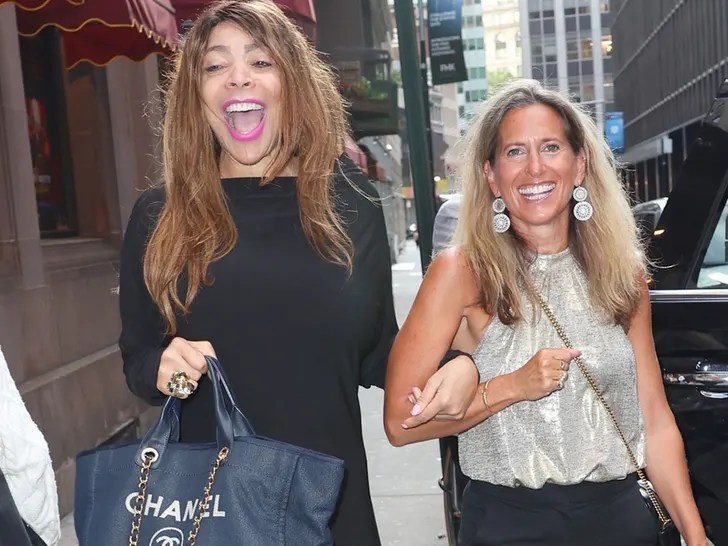
Wendy Williams, who celebrated he 61st birthday on July 18, 2025 spent the evening at Delmonico’s in NYC with her attorneys and former show producer. In true Wendy fashion she showed up dressed elegantly with a smile on her beautiful face and only bold things to say.
TMZ captured her one and only birthday wish on video – “out of the guardianship”.
This isn’t the first time Wendy has spoken publicly about her discontent with her current guardianship, and it’s becoming harder to ignore when a woman of sound mind is clearly in distress.
Public Support Grows Amid Wendy Williams Guardianship Battle
As Wendy continues to assert she is of sound mind, public advocacy and pressure are rising. This has proven affective in the past with high-profile cases like Britney Spears, and hopes are high that similarly positive results will be follow here.

Wendy Williams’ Cognitive Strengths Challenge the Need for Full Guardianship
Wendy Williams has shown clear signs of cognitive awareness that contradict a full loss of decision-making ability. In multiple interviews, including her recent on-camera birthday wish to “get out of the guardianship,” she has spoken clearly, expressed emotion, and recalled events with detail. These are not behaviors typical of advanced frontotemporal dementia, which usually involves steady decline in planning, empathy, language, and motor skills (National Council on Disability, 2018). Wendy’s ability to articulate her desires and engage socially suggests a level of competence that deserves a closer look—not a blanket restriction on her rights.
Studies show that cognitive capacity is often misjudged in older adults and disabled people. Many elderly nursing home residents were presumed to lack decisional capacity when formal assessments showed otherwise (Fitten, Lusky, & Hamann, 1990). In addition, full guardianships are frequently imposed without adequate exploration of alternatives or individualized assessments (National Council on Disability, 2018).
Wendy’s case highlights a larger systemic issue: no disabled person should automatically lose their agency. Her behavior demonstrates she can still participate in her own life—and she deserves the chance to do so.

Typical Symptoms of FTD in Relation to Wendy
Frontotemporal dementia usually causes gradual behavior changes, including:
- Ignoring social rules
- Impulsivity
- Loss of empathy or sympathy
- Repetitive or compulsive movements
- Dietary changes
- Poor insight and planning abilities
Language skills slowly deteriorate, while memory may stay relatively intact at first. People with FTD often experience muscle weakness, slowed movement, and coordination problems (National Council on Disability, 2018).
Wendy’s public behavior does not align with these symptoms. Although she appeared to forget details about an award show, in her documentary, it’s important to note that she was reportedly using alcohol heavily at the time. Such substance use can temporarily impair memory and focus and is not a reliable indicator of her overall cognitive abilities.
Additionally, Wendy frequently talks on the phone with Harvey Levins, a sad yet revealing sight as she is shown pressed against her window, longing for autonomy. However, listeners can clearly hear that since achieving sobriety, her cognitive awareness has steadily improved—something considered impossible in true cases of FTD (National Council on Disability, 2018).
Wendy Williams and Guardianship Reform: My Featured Commentary on TMZ Live
TMZ has been a consistent voice in covering Wendy Williams’ guardianship case, bringing national attention to the legal and ethical questions it raises. On July 18, 2025, I was featured as a commentator on TMZ Live, where I shared my perspective on why Wendy’s fight is about more than celebrity—it’s about autonomy, disability rights, and the urgent need for reform.
🎥 Watch my segment at the 24:18 mark below:
This moment gave me the opportunity to highlight how the guardianship system often fails the very people it’s supposed to protect. Wendy’s case is personal for so many of us who care about mental health advocacy and bodily sovereignty. Being part of this dialogue on a national platform is something I take seriously—and I’ll keep using my voice to push this conversation forward.

Where is Wendy Williams Living?
Wendy is currently living in a wellness facility she refers to as a “luxury prison” so it comes to no surprise that she was seen upbeat and happy while walking out in the sun and getting the exposure she so deserves on her 61st birthday.
The Mystery of Wendy Williams’ Progress: Could It Be Misdiagnosis?
It’s important to recognize that no documented cases of primary progressive aphasia (PPA) or frontotemporal dementia (FTD) — the diagnoses reportedly given to Wendy Williams — have ever shown true improvement or reversal.
These are relentlessly progressive neurodegenerative diseases, marked by continuous decline in language, behavior, and cognition. Yet, Wendy Williams has displayed moments of clarity and strength that make many, including myself, TMZ Live hosts Harvey and Charles, wonder is Wendy dealing with a misdiagnoses?
Guardianship Shouldn’t Mean Loss of Voice
It’s crucial to remember that no disabled person should ever lose all their agency and freedom. Disability, including neurodegenerative conditions, does not erase a person’s right to autonomy, dignity, and self-determination. Wendy Williams’ ongoing fight to reclaim control over her life highlights a vital issue: guardianship, while intended to protect, can sometimes strip individuals of their fundamental rights and voice. Respecting and preserving the agency of people with disabilities must remain at the forefront of all legal and medical decisions to ensure their freedom and humanity are never compromised.
🧠 Concerned About FTD?
If you’re concerned you or a loved one may have FTD, explore the diagnostic checklists here and reach out to a professional for a consultation. You’re not alone.
References:
Association for Frontotemporal Degeneration. (2024, February 22). Broadcaster Wendy Williams Diagnosed with FTD. Retrieved from AFTD:
https://www.theaftd.org/posts/1ftd-in-the-news/broadcaster-wendy-williams-diagnosed-with-ftd/
Association for Frontotemporal Degeneration. (2025). What is FTD? Disease overview. Retrieved July 19, 2025, from https://www.theaftd.org/what-is-ftd/disease-overview/?utm
Fitten, L. J., Lusky, R., & Hamann, C. (1990). Assessing treatment decision-making capacity in elderly nursing home residents. Journal of the American Geriatrics Society, 38(10), 1097–1104. https://doi.org/10.1111/j.1532-5415.1990.tb01372.x
Hodges, J.R., & Piguet, O. (2018). Progress and Challenges in Frontotemporal Dementia Research: A 20‑Year Review. Journal of Alzheimer’s Disease, 62(3), 1467–1480. doi:10.3233/JAD‑171087. Review conducted by the University of Sydney and ARC Centre of Excellence. https://pmc.ncbi.nlm.nih.gov/articles/PMC5870022/?utm
Johnson, C.K. (2024, February 22). Wendy Williams has frontotemporal dementia. What is FTD? Associated Press. https://www.pbs.org/newshour/health/wendy-williams-has-frontotemporal-dementia-what-is-ftd?utm
National Council on Disability. (2018, March 22). Beyond guardianship: Toward alternatives that promote greater self-determination. https://www.ncd.gov/assets/uploads/docs/ncd-guardianship-report-accessible.pdf
Randall, A., & Larner, A. J. (2014). Misdiagnosis of primary progressive aphasia: two case studies and a review of the literature. Practical Neurology, 14(4), 254–258. https://doi.org/10.1136/practneurol-2014-000870
TMZ. (2025, July 18). Wendy Williams Says Her Only Birthday Wish Is to Be Set Free From Guardianship | TMZ TV. Retrieved from https://www.tmz.com/watch/wendy-williams-bday-tmz-tv-07-18-2025/
UCSF Memory and Aging Center. (n.d.). Frontotemporal dementia misdiagnosis. https://memory.ucsf.edu/ftd-misdiagnosis?utm
CREATE. OPTIMIZE. INNOVATE.
High-Resolution Writing, LLC.

Subscribe to stay informed!


Discover more from High-Resolution Writing, LLC.
Subscribe to get the latest posts sent to your email.
