
Written by Madison Lamb • Published Jan 10, 2026 3:33 AM

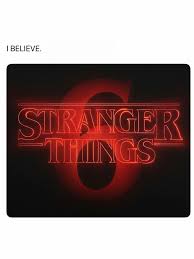
Stranger Things Season 5 has created a tsunami of fan theories stemming from Eleven’s ambiguous departure into the Upside Down. Having sustained such remarkable legacy, it’s no surprise that fans, like myself, are still talking about Stranger Things over a week after the door has closed. As an avid watcher, all I’m gonna say is ‘I believe.’
Although there are so many unanswered questions since the series finale dropped, we know for sure that the Duffer Brothers wanted us to be invested and process the ending exactly the way we are.
“We thought it would be beautiful if our characters continued to believe in that happier ending even if we didn’t give them a clear answer to whether that’s true or not. The fact that they’re believing in it, we just thought it was such a better way to end the story and a better way to represent the closure of this journey and their journey from children to adults.”
The Duffer Brothers designed Eleven’s departure to reflect the reality of grief. Rather than giving a clear resolution, they wanted the characters — and viewers — to hold onto hope while learning to move forward, capturing the journey from childhood to adulthood and showing how people cope with loss.
Coping? All this as at the tail-end of the holiday season felt like a big, emotional gut punch if you ask me (don’t worry even if you don’t ask I’ll still probably tell you). The Duffers knew exactly what they were doing and despite the polarizing opinions, Season 5 of Stranger Things changed my perspective on grief in so many ways. So let’s talk about it.

Dustin Experiences Anticipatory Grief in The Upside Down
I was distraught, along with the rest of the fandom, when the dynamic between Dustin and Steve began to fray at the seams. It became immediately obvious that Dustin was still grieving the loss of Eddie based on his calloused exterior and memorialized clothing, all stark contrasts to his outgoing, loyal attitude in the prior seasons.
Everything comes to a head when Steve’s reckless placement of a ladder in the upside down triggers a volcanic outpouring of fear from Dustin. He finally lets his guard down and tells Steve that the reason he has been so hard on him since Eddie died is because he’s afraid he’ll lose him too. That moment made me take a step back and realize that the anger I felt toward some of the closest people in my life stems from a deep-rooted fear of losing them.
This fear of impending loss is a widely-experienced phenomenon that often goes overlooked called anticipatory grief. Recognizing this fear in ourselves, as Dustin does, is a crucial first step in coping because it allows us to acknowledge our emotions, communicate them honestly with others, and find ways to support both ourselves and those we care about.
Hopper Battles Prolonged Grief and Attachment Anxiety
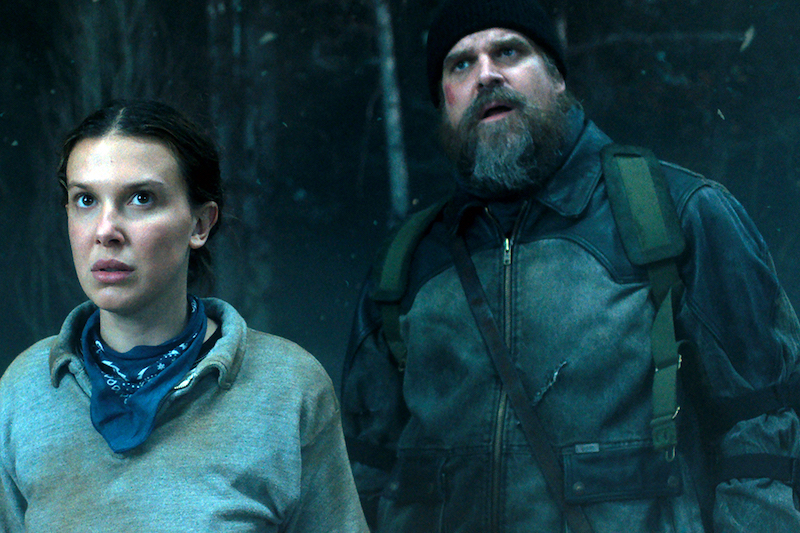
Throughout the entirety of the show we see Hopper’s love for his deceased daughter Sarah shine bright like an eternal flame. We know her death significantly impacted him. We’ve grown to admire his ‘papa bear’ tendencies that took El under his wing and away from captivity.
But love like Hopper’s comes with its shadows. His grief for Sarah never truly ended, and that lingering ache shaped the way he connected to Eleven. Psychologists call this prolonged grief, and when combined with attachment anxiety, it can make someone cling harder to those they fear losing. Hopper’s overprotectiveness isn’t just stubbornness or fear, it’s a deeply human response to losing a child, a loss that left him wired to protect the next person he loves with every ounce of himself.
We see it in the way he hovers, the way he worries, and the way he sometimes struggles to step back and let others live their lives. Watching this has made me realize the way I have behaved similarly in my life without even realizing it. Hopper’s journey reminds us that grief can shape how we love, sometimes in ways that are intense, overwhelming, and complicated, but also profoundly real.
I’ve been able to take a step back and evaluate why I am reacting the way I am when confronted with uncertainty. Watching him navigate this while still learning to trust and let go is a lesson in how attachment anxiety and prolonged grief can coexist with courage, care, and hope.
Henry Grieves His Childhood and Identity Loss
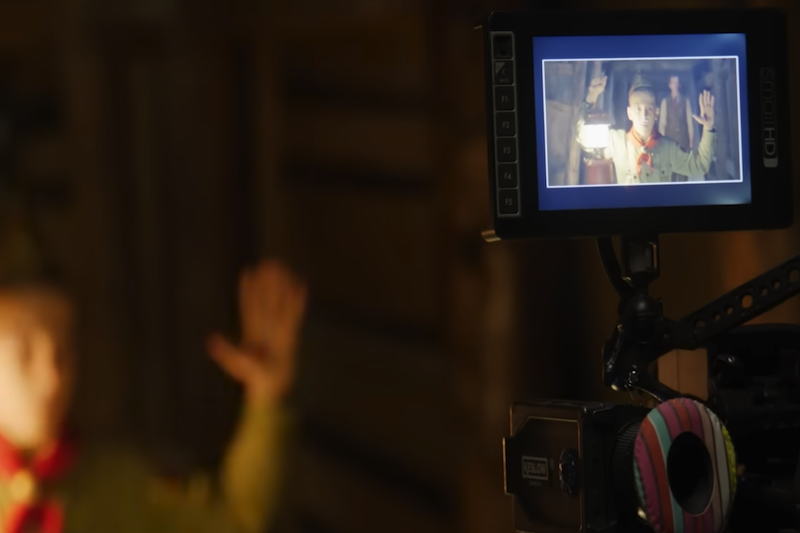
In Season 5, Episode 8 of Stranger Things, we finally see what’s inside the tantalizing briefcase that Max and Holly discover while escaping Camazots through Vecna’s memories in Episode 6. After ten years and 8 seasons we get to see, along with Will and Henry himself, the sad reality of Vecna’s origin.
He is not a monster born from darkness, but instead a young boy forced into the darkness itself much like Will when he was taken to the Upside Down in Season 1. Henry confronts the memory that kept him trapped for so long, watching as his younger-self is possessed by the taste of evil. He mourns his childhood, identity, sense of safety and his once-stable perspective of the world all in the brief moment before the Mind Flayer (anger) pulls him back in.
Psychological research helps us understand the depth of this experience. Grief is not limited to death; it can arise from any significant loss, including the loss of possibilities, identity, or life paths we were denied. Henry’s confrontation with his younger self is a vivid example of this, showing how grief can encompass the involuntary loss of a life that could have been, making the emotional experience intensely personal and complex.
Eleven Has Existential Grief Over the Life She Deserved
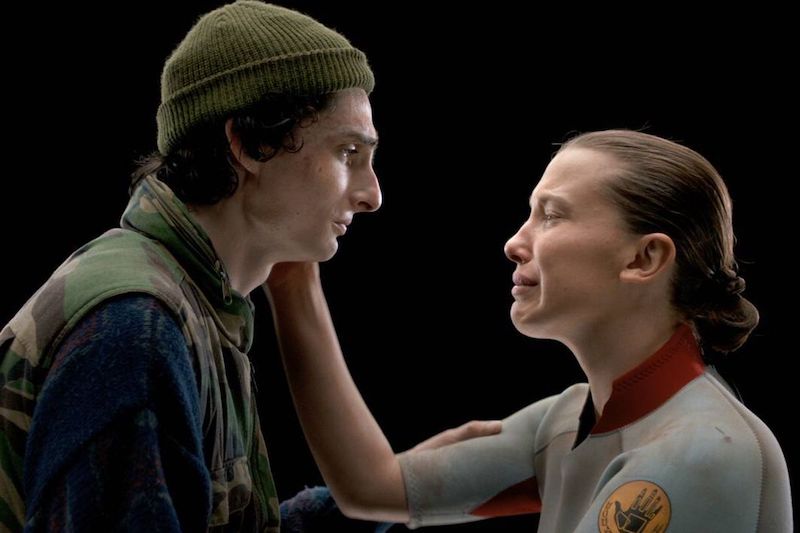
Eleven’s grief is deeply existential, the kind that hits when you pause and ask yourself, “What am I doing with my life?” She mourns not just what happened to her, but all the possibilities that were stolen. She never had a normal childhood, freedom to make her own choices, or the chance to simply exist without constantly sacrificing herself.
Having spent the majority of her life in captivity, she was conditioned to prioritize the needs of others above her own, a classic people-pleaser pattern reinforced by trauma. She is not only grieving what happened, but also grieving the life she never got to claim for herself, and the ways her identity and desires were suppressed along the way.
We can all relate to this kind of grief in small ways — that quiet, nagging sense that things didn’t turn out the way we imagined, or that certain possibilities were lost along the way. Psychologists call this existential loss, a form of grief that isn’t just about what’s gone, but also about what could have been.
Hopper Supports Mike Through Ambiguous Loss
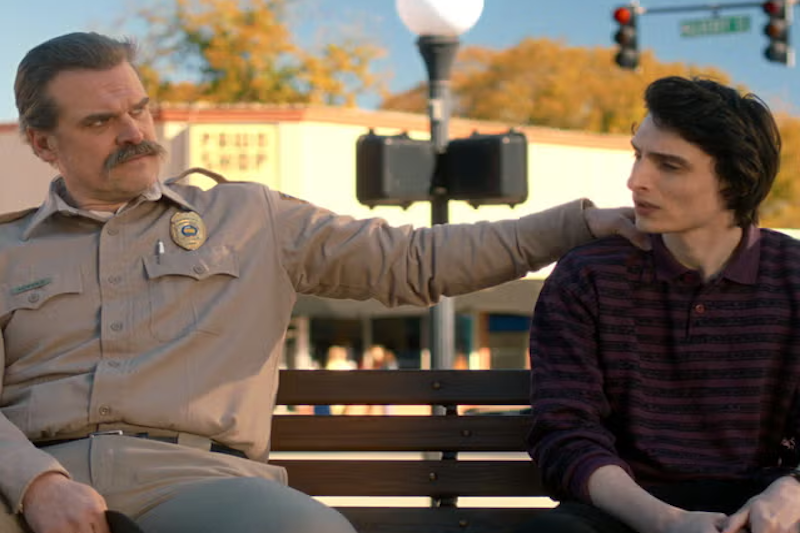
In Season 5, Episode 8 of Stranger Things, Hopper hits Mike with a monologue on grief that lands straight in the chest. As someone who lost her best friend to mental illness in 2024, I still struggle with grasping the concept of her no longer existing here on this earth. I blame myself, I ask all the questions and then some, and at the end of the day I am left feeling guilty going on without her here. The darkness tries to convince me that living a happy life when she’s not here is a sign of disrespect and I have to be sad all the time to honor her memory. I didn’t realize how maladaptive this was until December 31, 2025.
Hopper reminds Mike that grief is not about having all the answers. It is about accepting your emotions, allowing yourself to feel them, and processing loss without becoming so consumed that you shut out others or live in constant fear.
This is exactly what psychologists describe as navigating ambiguous loss, a type of grief that occurs when closure is unclear or uncertain. When someone is physically absent but psychologically present (or when their fate is unknown) it can be easy to get trapped in guilt, self-blame, or compulsive mourning. Hopper’s words help Mike, and me, realize that El wouldn’t want him to be stuck in fear or despair, and that allowing yourself to live fully is not a betrayal of those you’ve lost.
It’s funny how you can hear the same lesson a million times and only really understand it when the timing and context click. Seeing grief modeled in a character I love, and watching him process ambiguous loss with care, made the psychological truth finally land. Turns out, I wanted to hear it from Hopper!
Holding Onto Hope
Mike attends his graduation thanks to Hopper’s encouragement and while he’s there he remembers something crucial from the night they defeated the mind flayer. The sonic dampeners, designed to block Eleven’s powers, were still active while Eleven stands tall in the portal. He realizes that the girl everyone saw could not have been the real Eleven. It must have been a projection, a hologram, something meant to mislead. Eleven escaped? She survived?
That realization gives Mike a way to process his grief. He crafts the “mage story” for his friends, a way to hold hope, protect others from heartbreak, and honor Eleven’s survival.
The audience even sees Kali using her powers while Eleven disappears to a distant place with three waterfalls. Hopper’s words and Mike’s observation together show that processing grief is about acknowledging uncertainty, letting yourself feel, and remembering that love and life continue even in the absence of closure.
So, are we all in denial? Is conformity gate real? Who’s to tell? Well… The Duffer Brothers, of course, but they are totally cool with the plot holes so here we are, left to cope with this ambiguous loss.
How to Cite This Article (APA 7th Edition):
Lamb, M. J. (2026, January 10). How Stranger Things Season 5 Shows How to Process Loss. High‑Resolution Writing, LLC. https://high-res-writing.com/how-stranger-things-season-5-shows-how-to-process-loss
References:
Cleveland Clinic. (2024, April 9). Anticipatory Grief: Symptoms and How to Cope. https://health.clevelandclinic.org/dealing-with-anticipatory-grief
Eisma, M. C. (2025). Attachment anxiety and lingering attachment to the deceased predict grief severity: A longitudinal study. Journal of Social and Clinical Psychology, 44(3), 203–222. https://doi.org/10.1521/jscp.2025.44.3.203
Hatchett, K. (2026. January 2). Stranger Things’ series finale” The Duffer Brothers dive deep into the emotional ending (Interview). Netflix Tudum. https://www.netflix.com/tudum/features/stranger-things-series-finale-duffer-brothers-interview
Oswald, R. (2023, April 10). Unnamed pain: Coping with ambiguous loss. Mayo Clinic Health System. https://www.mayoclinichealthsystem.org/hometown-health/speaking-of-health/coping-with-ambiguous-grief
Ratcliffe, M., & Richardson, L. (2023). Grief over Non-Death Losses: A Phenomenological Perspective. Passion: Journal of the European Philosophical Society for the Study of Emotions, 1(1), 50-67. https://doi.org/10.59123/passion.v1i1.12287
CREATE. OPTIMIZE. INNOVATE.
High-Resolution Writing, LLC.

Subscribe to stay informed!


Discover more from High-Resolution Writing, LLC.
Subscribe to get the latest posts sent to your email.
